
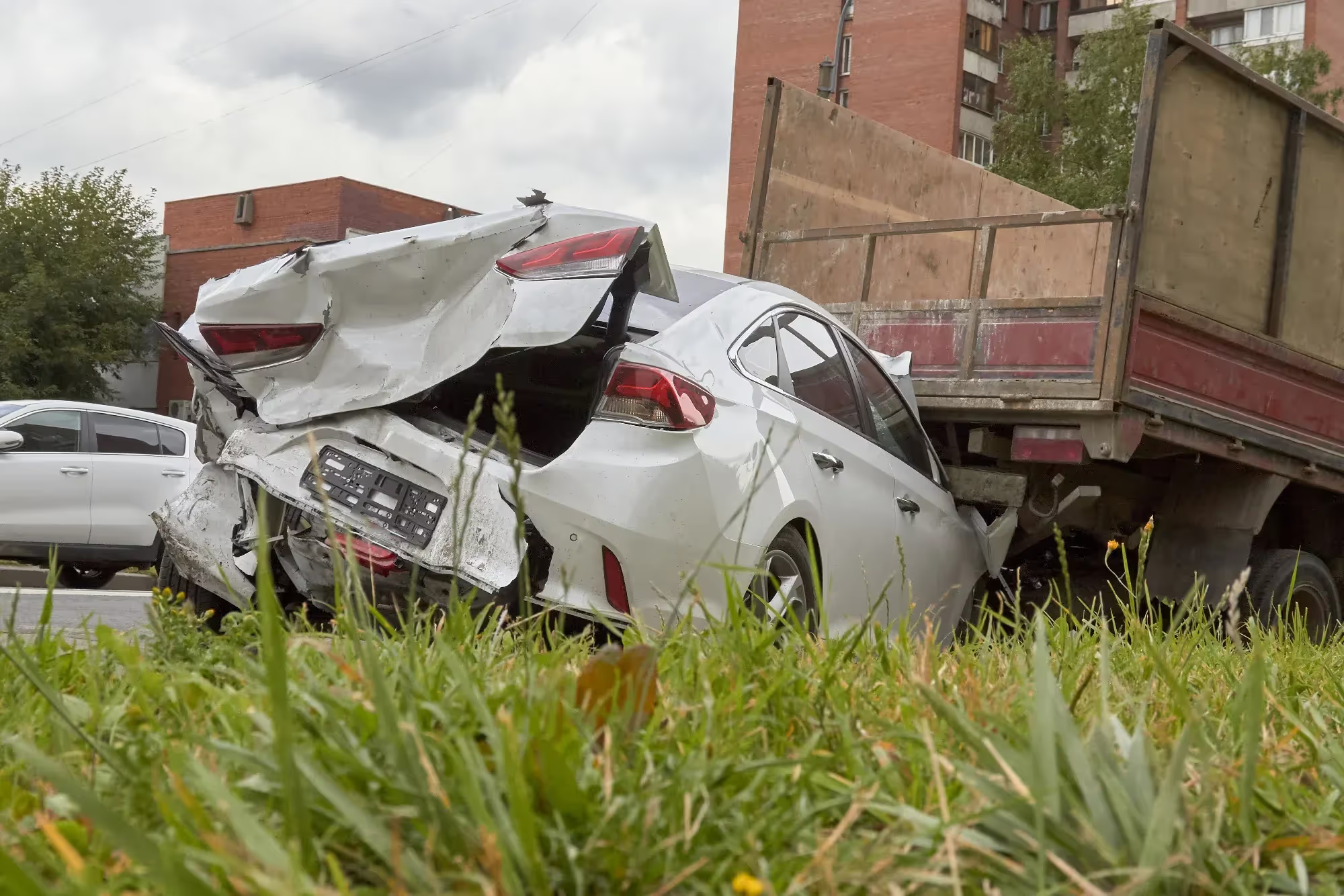
What Happens if You're in an Uber Accident in Atlanta?
table of contents
What are your rights if you’re the victim in an Uber accident in Atlanta? It’s something most of us never think about. However, the truth is that you’re no less likely to be involved in a rideshare accident compared to a regular car accident. Liability isn’t always straightforward with rideshare apps because of the industry’s complicated structure that blends corporations with independent contractors. Knowing your rights, who to call, and the steps you need to take to report the crash can be important. Here’s what to do after an Uber accident.
Common causes of rideshare accidents in Atlanta
There are countless reasons for rideshare accidents. Unlike taxi companies, rideshare apps aren’t in charge of vehicle maintenance. That’s up to the independent contractors who sign up to provide their own vehicles as rideshare drivers. As a result, maintenance lapses can be factors in rideshare accidents.
Distracted driving is another major cause of rideshare accidents. Drivers often keep their eyes glued to their navigation systems to bring passengers to their destinations. Drivers may also be distracted by their phones. Additionally, issues like reckless or aggressive driving, unfamiliarity with local roadways and traffic laws, inexperience with driving, and poor weather conditions can also cause accidents.
Immediate steps to take after an Uber crash
Knowing what happens if your Uber crashes is crucial for protecting your rights. You can’t rely on the driver to look out for your best interests after an Uber or rideshare accident. Proper documentation will be essential if you need to file a claim for damages. Here’s what to do if you’re involved in an Uber crash.
1. Ensure everyone’s safety and call 911
The scene of a car accident should always be treated as an emergency situation. First, check to see if you, your driver, or any passengers have been injured. Call 911 for any injuries. The police should be notified even if there are no obvious injuries. It’s important to file an accident report to create an accurate record of the circumstances and aftermath of the accident.
2. Gather information from all parties
Eyewitness testimonies can be important for establishing liability. Ask the names of any witnesses who stopped to help. If possible, ask if they will stick around until the police come to provide eyewitness testimony about anything they saw in the moments leading up to, during, or immediately following the accident. Lastly, try to collect the contact information of everyone involved in the accident. You should also notify the rideshare company at this point to prevent the driver from taking action to cover their tracks or distort facts.
As a rider, you can do that in the app, through the Safety Incident Reporting Line on the Ride Details screen in the Activity section. Before the police leave, write down the report number, since BuyCrash asks for it when you buy an Atlanta Police Department report there for $11. One catch: crashes on interstates inside city limits on weekdays between 6:00 a.m. and 8:00 p.m. are handled by the Georgia State Patrol, so that report has to come from GSP (ATL311).
Your Uber accident claim will rest on those two records: the in-app report and the police report.
3. Document the accident scene
If you haven’t sustained injuries that prevent you from safely gathering evidence, begin taking photos and jotting down everything you remember about the accident. Pictures of tire skid marks, vehicle damage, roadway or sidewalk damage, and other evidence are also helpful for painting a picture that can be used in your case. Also consider taking screenshots capturing your ride details to protect against the event that your rideshare profile is accidentally deleted or altered.
4. Seek medical attention immediately
There’s a good chance that adrenaline will be flooding your body immediately following a car accident. Adrenaline can mask pain and injuries. While it can be tempting to wave away medical help at the scene of the accident, it’s very important that you’re examined by a medical professional. If you’d like to avoid an ambulance ride for non-serious injuries, do consider at least visiting a hospital on your own for a thorough medical exam. Doctors can often detect signs of injury that may not be apparent to you in the immediate aftermath of an accident.
Understanding Uber’s insurance coverage
The company classifies its drivers as independent contractors, so it isn’t always directly liable for damages. After an Uber car accident, the policy that pays depends entirely on the driver’s app status at the moment of the crash. Basically, it comes down to what the driver’s screen showed when the cars collided. O.C.G.A. § 33-1-24 sets the minimum limits for the periods when the driver is logged in.
| Period | Driver status | Coverage that applies |
|---|---|---|
| Period 0 | App off / not logged in | Driver’s personal auto insurance only; Uber provides none |
| Period 1 | Logged in, waiting for a request | Limited Uber liability: $50,000 bodily injury per person / $100,000 per accident / $50,000 property damage |
| Period 2 | Request accepted, en route to pick up the rider | Uber’s full $1,000,000 liability policy, plus uninsured/underinsured motorist (UM/UIM) coverage: $100,000 per person / $300,000 per accident / $25,000 property damage |
| Period 3 | Rider in the vehicle | Same as Period 2: $1,000,000 in liability coverage plus UM/UIM at the same limits |
Georgia law doesn’t actually separate Periods 2 and 3. Under the statute, they’re a single tier that runs from the moment a driver accepts a request until the ride is complete.
The limits in Periods 1 and 2 differ by a factor of ten.
So insurers routinely dispute which period applied when the crash happened. This comes up a lot, honestly, and sometimes it turns on for a few minutes either way. The app data / trip records and the police report usually settle it. If the driver’s personal insurer asks, the law requires Uber to provide, within 15 days, the time of the crash and the exact times the driver logged on and off during the 12 hours before and after it (O.C.G.A. § 33-1-24(h)(4)).
Who Is Liable for an Uber Accident in Atlanta?
Figuring out who is liable in an Uber accident comes down to two questions: who caused the crash, and what the driver’s app status was at that moment.
Often the Uber driver is at fault, whether distracted by the navigation app in Downtown Connector traffic or failing to yield on a turn. Even holding a phone to follow a map violates O.C.G.A. § 40-6-241. The policy for that period pays, per the table above.
If another driver caused the crash, their insurance is primary. A rider whose at-fault driver has little or no coverage falls back on the UM/UIM in Uber’s policy, and an estimated 19% of Georgia drivers were uninsured in 2023 (Insurance Research Council via Triple-I). We’ve covered what to do when an uninsured driver hits your Uber in a separate guide.
Uber itself is rarely liable, and since July 1, 2025, even less so. HB 339 (O.C.G.A. § 40-1-201) shields the company from liability for a driver’s crash as long as it wasn’t negligent, follows the law and re-checks every driver’s background at least once every two years. You can still bring a negligent hiring claim against Uber, for example, if the company let a driver onto the platform without a check or missed a DUI conviction on their record.
The driver’s personal auto policy is a separate problem. As the NAIC notes, most personal auto policies don’t cover driving for pay (the commercial-use exclusion), and Georgia law expressly allows insurers to exclude the time a driver is logged into a rideshare app (O.C.G.A. § 33-1-24(g)(2)). So the driver’s personal insurer tends to deny the claim, and everything turns on Uber’s commercial policy and the period of the crash. We see these denials often. But you don’t have to wait for one: Uber’s coverage doesn’t depend on it.
And sometimes the fault is split, for instance between an Uber driver who was speeding and another driver who ran a red light.
How Georgia Law Affects Your Uber Accident Claim
Georgia follows a modified comparative negligence rule (O.C.G.A. § 51-12-33). Your recovery shrinks by your share of fault, and at 50% or more, you recover nothing. Say your damages total $50,000 and you’re found 15% at fault: you would receive $42,500. You’ll rarely carry any of the fault as a passenger, but a driver or pedestrian who got hurt can expect the insurer to push a percentage onto them and build it into any Uber accident settlement it offers.
The statute of limitations for injury claims is generally two years from the date of the crash (O.C.G.A. § 9-3-33). Two years can go fast once treatment and the back-and-forth with insurers get going.
Georgia’s 2025 tort reform (SB 68) affects these cases too. For crashes on or after April 21, 2025, medical expenses are measured by the reasonable value of the care, and if you have health insurance, the jury sees both the billed amount and the amount actually paid to satisfy it (O.C.G.A. § 51-12-1.1). In lawsuits filed on or after that date, an unbuckled seat belt can also be used against you, even in the back seat, where Georgia doesn’t require adults to buckle up (O.C.G.A. § 40-8-76.1(d)).
Why you should speak with an Atlanta Uber accident lawyer
What happens if your Uber driver crashes largely comes down to the steps you take in those crucial minutes and hours after the accident. If you’ve been injured as a passenger while using a rideshare service, talk to an Atlanta attorney right away. An Atlanta Uber & Lyft accident lawyer is deeply familiar with the requirements and stipulations involved with accessing insurance payouts from major insurance companies.
Insurance policies from Uber and Lyft have complicated exceptions and rules that can make getting the payout you’re entitled to receive difficult for the average person. By looking over the details of your accident with the right lawyer, you can immediately begin developing a plan to seek damages from a rideshare app’s insurance policy or the driver’s personal insurance. Call (855) 537-6264 today to get started.
Frequently Asked Questions
Who pays if my Uber driver caused the crash?
As a passenger, you were on a trip, so Uber’s $1,000,000 policy applies. If an Uber driver hits your car instead, the limit depends on their app status, ranging from that same million once a request has been accepted down to the driver’s personal insurance alone if they were offline.
What if another driver caused it?
Their insurance pays first. If it’s missing or too small and you were a passenger, Uber’s UM/UIM steps in, and as the company itself points out, riders may have UM/UIM benefits through their own insurance too.
Does Uber’s $1 million always apply?
Uber’s $1 million policy applies only from the moment the driver accepts a ride until the trip ends. That’s real money, to be fair, though it isn’t there in every period. While the driver is waiting for a request, the limits are far lower. With the app off, Uber pays nothing. And the million is liability coverage: since July 1, 2023 (HB 529), the UM/UIM coverage Georgia requires for riders has been $100,000 per person and $300,000 per accident, not $1,000,000.
How long do I have to file in Georgia?
Generally two years from the date of the crash, under O.C.G.A. § 9-3-33. Don’t wait until the deadline is close: footage from nearby cameras gets overwritten, witnesses forget details and insurers take weeks to review an Uber accident claim.
What is your case worth?
Use this settlement calculator to estimate the value of your personal injury case before you accept an insurance offer.


Discover your legal options. Get a free case review, and pay nothing unless we win.
Recent Articles

Free case review.
No fee unless we win.
Tell us what happened and we'll call you back within the hour, day or night.


