
Motorcycle Lane Splitting Accidents in California: Who Is at Fault?
table of contents
You were riding between lanes in heavy traffic on the 101 or the 405. Everything is legal. The driver on your left jerked the wheel without checking their mirror. Now you're in a hospital bed, your bike is totaled, and the other driver's insurance company is claiming you caused the crash because you were “weaving between cars.”
Lane splitting is legal in California. But legal doesn't settle the question of fault. Who pays for a lane-splitting accident depends on what both parties were doing at the moment of impact.
Is Lane Splitting Legal in California?
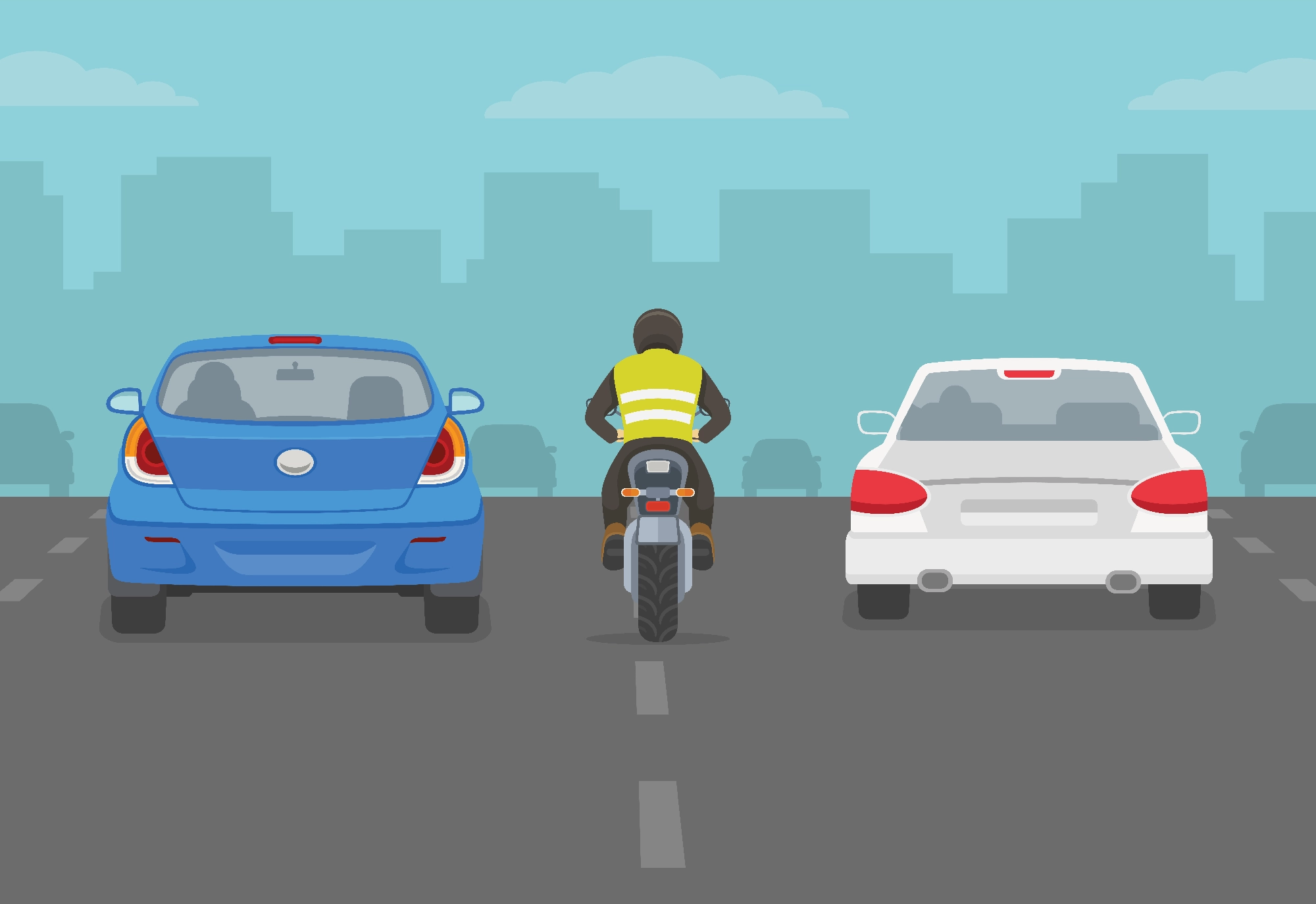
Riders who get hit between lanes always ask the same thing first: can motorcycles split lanes in California? Yes. The California lane splitting law (CVC § 21658.1), signed in 2017 as AB 51, makes this the only state where the practice is defined by statute. The formal definition: a two-wheeled motorcycle moving between rows of stopped or moving vehicles in the same lane. The law sets no speed limits for the practice. Instead, it directs the California Highway Patrol to develop educational guidelines for safe lane splitting.
CHP published the following recommendations:
- Don't exceed surrounding traffic speed by more than 10 mph
- Only lane split when traffic is moving below 30 mph
- Stick to the space between the far-left lanes, where fewer drivers change lanes
- Stay away from trucks and buses
California lane-splitting laws and regulations don't set a hard speed cap. These CHP recommendations are guidelines, not enforceable rules. But courts and insurance companies treat them as the benchmark for reasonable motorcyclist behavior. If you followed them, your position would get considerably stronger.
Determining Fault in a Lane-Splitting Accident
Lane splitting alone doesn't make the motorcyclist at fault. And lane splitting alone doesn't let the car driver off the hook. In most lane-splitting collisions, both sides are partially at fault. What determines the split is what each person actually did.
When the Car Driver Is at Fault
The most common scenario involves a driver making a sudden lane change without checking mirrors or the blind spot. Next is dooring, where the door swings open directly in the motorcyclist's path with no time to react. Less frequent but equally actionable: deliberately blocking a rider's path, which CVC § 21658.1 explicitly prohibits.
Each of these qualifies as an unsafe lane change or negligence. On some of the worst freeways in California, these sudden moves happen dozens of times an hour, especially when traffic slows and drivers start cutting from lane to lane.
When the Motorcycle Rider Is at Fault
A rider's share of fault goes up when they were traveling well above the flow of traffic (15+ mph over surrounding speed), weaving unpredictably between lanes, or lane splitting when traffic was already moving faster than 30 mph. Riding without a helmet in violation of CVC § 27803 also factors into the fault calculation, even if it had nothing to do with the crash itself.
How California's Pure Comparative Negligence Applies to Your Case
California follows pure comparative negligence (Li v. Yellow Cab Co., 1975). You can recover damages even if a court finds you 60, 70, or 80 percent at fault. There is no threshold where your right to compensation disappears. The award simply gets reduced by your percentage of fault.
Say the total damage comes to $200,000. The court assigns 30% fault to you. You walk away with $140,000. In any case involving shared liability, insurance companies work to inflate the rider's share of blame: speed differential, lack of protective gear and weaving. Every extra percentage point saves them thousands.
Damages You Can Recover After a CA Motorcycle Accident
According to UC Berkeley's SafeTREC, 22% of motorcyclists involved in California crashes suffer severe or fatal injuries. For car occupants, that number drops to 4%. A rider's body has nothing between it and the pavement.
You can pursue compensation for:
- Medical bills, including future surgeries and long-term rehabilitation
- Lost wages and diminished earning capacity if your injuries keep you from returning to the same line of work
- Pain and suffering
- the cost of your motorcycle and gear
If the driver was grossly negligent (texting behind the wheel, driving under the influence), a court can award punitive damages on top of that.
Why You Need a California Motorcycle Accident Attorney
The other driver's insurer starts building their case on day one. Their goal is to prove your lane splitting was unsafe and shift as much fault onto you as possible. Without a lawyer, you're negotiating against a professional team with budget and experience on their side.
An experienced California motorcycle accident lawyer knows how to lock down evidence before it disappears: traffic camera footage, witness statements and police report data. Kermani LLP works on a contingency fee basis. You pay nothing unless we win.
Frequently Asked Questions (FAQs)
Can I Still Get Compensation If I Was Speeding While Lane Splitting?
Yes. Pure comparative negligence in California doesn't cut off your right to compensation at any fault level. The court reduces your award proportionally but won't zero it out. What matters most is how far above the flow of traffic you were riding and whether that speed difference actually contributed to the collision.
What Should I Do Immediately After a Motorcycle Crash in CA?
Call 911 if anyone is hurt. Don't remove your helmet on your own if you suspect a neck injury. Photograph the scene, the damage to both vehicles, and the road markings. Get contact information from witnesses. Call the police: a police report documents the circumstances of the crash and becomes a key piece of evidence later. Don't discuss fault at the scene, and don't give a recorded statement to any insurer without an attorney present.
Does the Insurance Company Automatically Blame the Motorcyclist?
Almost every time. “The rider was squeezing between lanes, it's their fault” sounds convincing to someone who has never been on a motorcycle. Insurers know this and count on that bias. That's exactly why evidence matters more than words: dashcam footage, traffic cameras, speed analysis and witness testimony. The sooner an attorney starts collecting that evidence, the harder it becomes for the insurer to pin the blame on you

Discover your legal options. Get a free case review, and pay nothing unless we win.

Free case review.
No fee unless we win.
Tell us what happened and we'll call you back within the hour, day or night.


